
RPET vs virgin PET: what each export market really requires
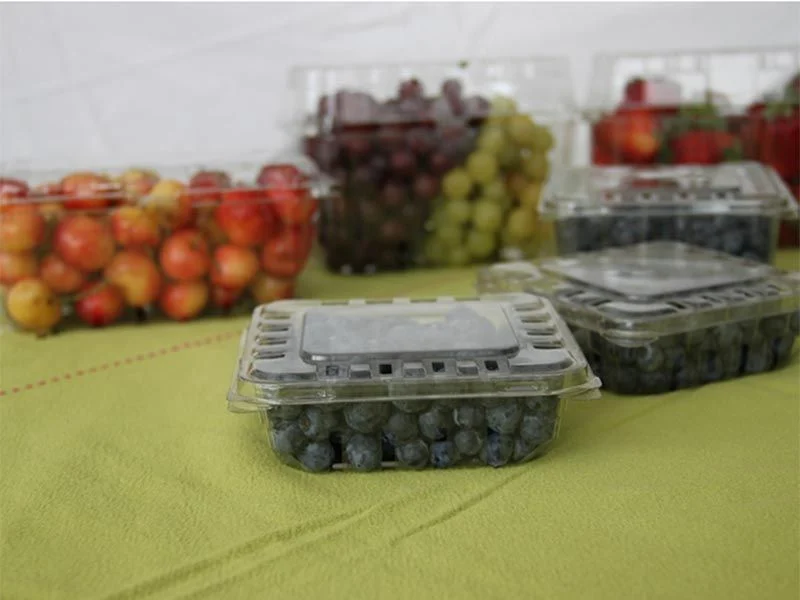
“Recycled” sounds, to many buyers, like a compromise: less clarity, less strength, less barrier. With the RPET used today in export clamshells and trays, that association no longer applies — but it is worth understanding what exactly is being compared.
RPET is not a different material: it is the same PET, recovered
Food-contact recycled PET (RPET) starts from the same polymer as virgin PET. The difference lies in where the raw material comes from, not in the chemistry of the package. Properly processed, it offers the same clarity and the same barrier that a fresh product — berries, meat, bakery — needs to arrive at its destination in good condition.
Not every package uses the material the same way
In clamshells for berries, the package is usually a single piece of clear RPET. In heat-sealable trays for meat the structure is different: they carry a polyethylene layer that acts as an adhesion bridge so the sealing film bonds properly. There we talk about PET-PE or PP-PE depending on the base, and in some formats an ABA structure — 80% RPET, 20% virgin material in the outer layers — to combine barrier with the recycled content the buyer asks for.
Who sets the percentage: your customer, not the manufacturer
Each market and each buyer sets its own recycled-material requirement, and that requirement changes with the product and the destination. That is why the right package is neither “the most recycled possible” nor “the cheapest possible”: it is the one that meets the barrier your product needs with the RPET percentage your customer asks for, from 0 to 100%. Confirming that number in writing before ordering the format saves a full production round if the buyer rejects it later.
How to verify that a food-contact package is safe
With a current, verifiable certification. The reference standard for packaging materials is the BRCGS Global Standard for Packaging Materials, recognized by the GFSI (Global Food Safety Initiative). It is not enough for the supplier to say it is certified: ask for the certificate number and who issued it, and check that it is still valid.
A certified plant, our own sheet, an RPET percentage defined with you: that is the combination that avoids surprises when the package reaches your buyer’s table.
Do you need to define the package for your product?
Tell us what you pack and which market you export to, and we will propose the format.